
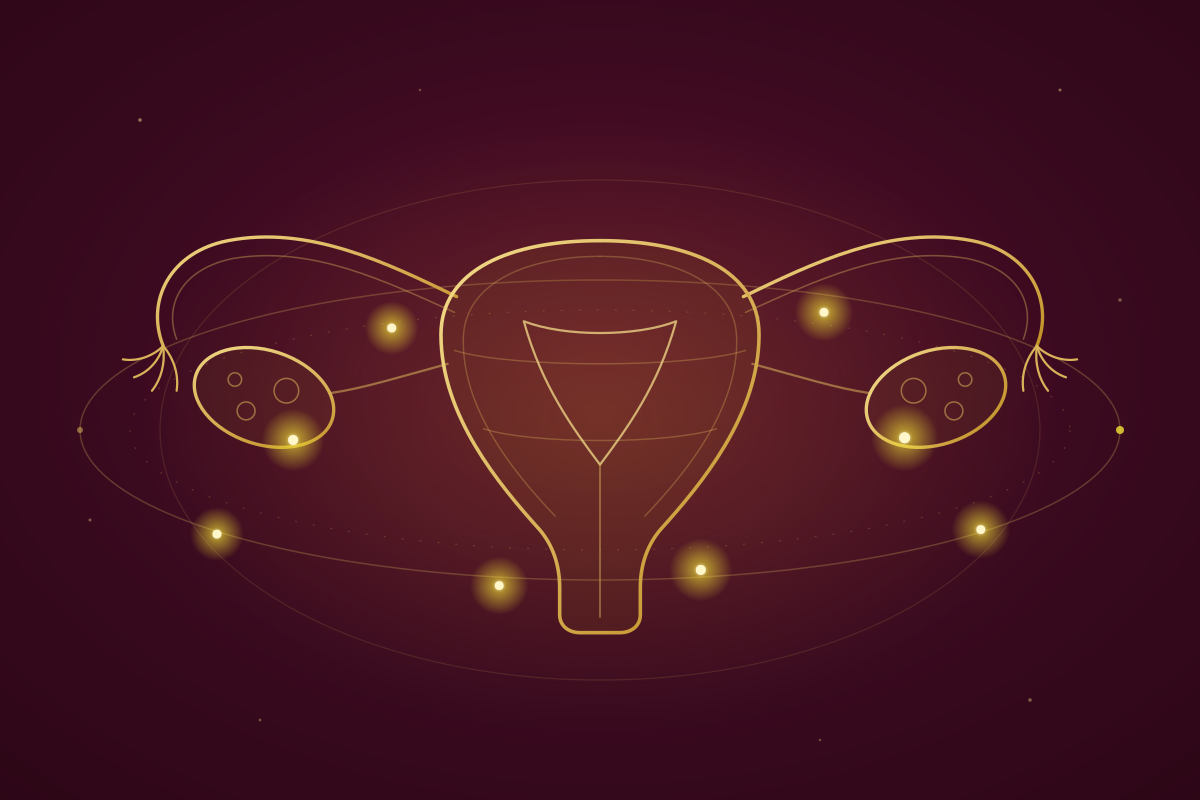

What is endometriosis?
Endometriosis is a chronic condition in which tissue similar to the lining of the uterus grows outside the uterus, most often on the ovaries and the lining of the pelvis. This tissue responds to the hormones of the menstrual cycle, causing inflammation that can lead over time to scarring, adhesions and pain.
The World Health Organization estimates that endometriosis affects around 10% of women and girls of reproductive age worldwide. Despite this, diagnosis is often delayed, because severe period pain is too often treated as normal.
Endometriosis is not cancer and not an infection, and it cannot be passed from person to person. It is a long-term condition that calls for a treatment and follow-up plan built around each patient's symptoms and goals.
Endometriosis symptoms
Symptoms vary from person to person, and the severity of pain does not necessarily reflect the extent of disease: small lesions can be very painful, while widespread disease may cause few symptoms. The most common symptoms are:
- Severe period pain that disrupts school or work and does not settle with usual painkillers
- Chronic pain in the pelvis, lower abdomen or lower back, even outside your period
- Pain during or after sex
- Pain when opening the bowels or passing urine, especially during your period
- Bloating, diarrhoea, constipation or nausea that worsens with your period
- Heavy periods or spotting between periods
- Persistent fatigue
- Difficulty becoming pregnant
Normal period pain or endometriosis?
Ordinary period pain usually eases with simple painkillers and does not stop you getting on with your day. Pain that keeps you from school or work, gets worse year after year, continues beyond your period, or comes with pain during sex or bowel movements deserves a specialist assessment.
Can endometriosis cause no symptoms?
Yes. Endometriosis is sometimes found during fertility investigations or when the ovaries are scanned for another reason. Involvement of the ureter can also be silent despite its importance, which is why deep disease needs regular follow-up.
What causes endometriosis?
There is no single proven cause yet; endometriosis most likely results from several factors acting together. The main scientific explanations include:
- Retrograde menstruation: some menstrual blood flowing back through the fallopian tubes into the pelvis
- Genetics: the risk is higher if your mother or sister has endometriosis
- Immune system changes that make it harder to clear cells outside the uterus
- Oestrogen, which stimulates the growth of these lesions
- Cells of the pelvic lining changing into cells similar to the uterine lining
Having one of these factors does not mean you will develop endometriosis, and the condition is never something a patient caused. There is no proven way to prevent it, but earlier diagnosis helps bring symptoms under control before they take over daily life.
Types of endometriosis and where it occurs
Endometriosis is classified by where lesions are and how deep they go, which guides treatment planning better than pain severity alone.
Superficial peritoneal endometriosis
Small lesions on the lining of the pelvis (the peritoneum), the most common type. They may not show on ultrasound or MRI even when they cause significant pain.
Ovarian endometriomas (chocolate cysts)
Cysts on the ovary filled with old, dark blood, which gives them their name. They usually show on ultrasound, and decisions about treating them must weigh ovarian reserve and pregnancy plans.
Deep endometriosis
Lesions that infiltrate deeper tissue and can involve the ligaments behind the uterus, the bowel, the bladder or the ureters. They need specialist imaging, and careful surgical planning if surgery is chosen.
A related condition, adenomyosis, occurs when lining-like cells grow within the muscle of the uterus itself, and it can coexist with endometriosis. Rarely, lesions are found outside the pelvis, for example on the diaphragm or in old surgical scars.
How is endometriosis diagnosed?
Diagnosis starts with a detailed conversation about your symptoms, menstrual history and previous treatment, then the right investigations are chosen for your situation.
Medical history and examination
You will be asked about the type and timing of pain and how it relates to your period, sex, bowel movements and urination, and about any attempts to conceive. An examination is offered only after it has been explained and you have agreed.
Ultrasound
Transvaginal ultrasound is usually the first test. In the hands of a clinician experienced in endometriosis it can detect endometriomas and much deep disease. For patients who have not been sexually active, abdominal or transrectal ultrasound is used instead.
MRI
MRI is used in selected cases to map deep disease and its relationship to the bowel, bladder and ureters, particularly before planning surgery.
Diagnostic laparoscopy
Laparoscopy is no longer a required step before treatment can start: current guidelines allow treatment based on symptoms and imaging. It remains useful when symptoms persist despite normal imaging or medical treatment has not helped, and a biopsy can be taken to confirm the diagnosis.
A normal scan does not rule endometriosis out, because small superficial lesions may not show. A blood test such as CA-125 cannot confirm or exclude the diagnosis on its own.
Is endometriosis dangerous?
Endometriosis is a benign condition and is generally not life-threatening. It can, however, seriously affect quality of life, mental health, relationships and fertility. Follow-up matters most when there is:
- Involvement of the ureter, which can block urine drainage from the kidney without obvious pain
- Bowel or bladder involvement that affects how they work
- Large or recurrent endometriomas on the ovary
- Chronic pain that affects work, study or sleep
Does endometriosis cause cancer?
Endometriosis itself is not cancer. Studies show a small increase in the risk of certain ovarian cancers in people with endometriosis, but the overall risk remains low. Any unusual change in an ovarian cyst is discussed during follow-up.
Endometriosis treatment
No single treatment suits everyone. The choice depends on your symptoms, where the disease is, your age, your pregnancy plans and your preferences, and many patients improve with medical treatment without surgery. Surgery is not the first step; it is discussed when the situation calls for it.
Pain relief
Non-steroidal anti-inflammatory drugs can ease period pain and may be combined with other treatments.
Hormonal treatment
Hormonal treatment aims to quieten the lesions and reduce pain. Options include the combined pill, progestogens, the hormonal coil and, in selected cases, medicines that suppress ovarian hormones. Most of these are contraceptive while you take them, so they are discussed alongside your pregnancy plans, and pain may return when they stop.
Laparoscopic surgery for endometriosis
Laparoscopy is considered when symptoms persist despite medical treatment, when cysts or deep disease affect organ function, or in selected fertility situations. Through small abdominal incisions and a camera, lesions are removed and adhesions released while healthy tissue is preserved. Surgery for deep disease is planned in advance, with colorectal or urology colleagues when needed.
Hysterectomy
A last resort for a small number of patients who have completed their families and in whom other options have not worked. On its own it does not guarantee relief if endometriosis outside the uterus remains.
Can endometriosis be cured?
There is currently no treatment that guarantees a permanent cure, but symptoms can be controlled for many patients and quality of life clearly improved. Symptoms can return for some after stopping hormonal treatment or after surgery, which is why follow-up is part of treatment.
Symptoms usually settle after the menopause, as hormone levels fall. Until then, regular review lets the plan change as symptoms and priorities change.
Endometriosis and pregnancy
Many people with endometriosis conceive naturally. In some, however, endometriosis can lower the chance of pregnancy through adhesions, inflammation or the effect of cysts on the ovary.
If pregnancy is delayed, assessment covers age, ovarian reserve, the fallopian tubes and a semen analysis, followed by a discussion of the options: continuing to try naturally, surgery in selected cases, or IUI or IVF.
Ovarian reserve should be assessed before any surgery on the ovary, because removing cysts can reduce the number of eggs. Tell your doctor if you are trying to conceive before starting hormonal treatment.
Endometriosis in young women who are not sexually active
Endometriosis symptoms can begin in the teenage years, and severe period pain in girls is often dismissed as normal, delaying diagnosis by years.
Assessment respects privacy fully: it relies on the medical history, abdominal or transrectal ultrasound, and MRI when needed, without a vaginal examination. Pain relief or age-appropriate hormonal treatment can be started, and if a laparoscopy is needed it is performed through small abdominal incisions.
Endometriosis treatment with Dr. Waleed Tawfeek
Dr. Waleed Tawfeek is Assistant Professor of Obstetrics and Gynaecology at Benha University, Senior Consultant of Obstetrics and Gynaecology and Gynaecologic Laparoscopy, and Secretary of the Egyptian Society for Minimal Access Surgery. He has performed more than 500 endometriosis and laparoscopic surgeries, with international training in Germany, Italy and the United Kingdom.
Dr. Waleed treats patients from Egypt and abroad in Benha, Sheikh Zayed, Nasr City and Alexandria, and offers online consultations that can begin before you travel by sharing your reports and scans. His approach starts with careful assessment and medical treatment where appropriate, treating surgery as the last resort once other options are exhausted or when an organ's function is affected.
When to see a doctor
Book an appointment if period pain disrupts your life, pain continues between periods, you have pain during sex, bowel movements or urination, pregnancy is delayed, or symptoms worsen despite treatment. Sudden severe pain, fainting, very heavy bleeding, or a high fever with abdominal pain needs urgent medical assessment at your nearest emergency department.
To get the most from your consultation, bring scan and operation reports and a list of your medicines, and keep a record of when pain occurs in relation to your period for two or three months.
Endometriosis: common questions
Short answers to the questions patients ask most often.
Does a normal scan rule out endometriosis?
No. Imaging shows some forms of the disease, such as endometriomas and deep disease, but small superficial lesions may not be visible. Persistent symptoms deserve further assessment.
Does everyone with endometriosis need an operation?
No. Many patients improve with pain relief and hormonal treatment. Surgery is discussed when symptoms persist, when an organ's function is affected, or in selected fertility situations.
Can endometriosis come back after surgery?
Symptoms can return for some patients after surgery. For those not trying to conceive at the moment, hormonal treatment after the operation helps reduce the chance of pain returning, alongside regular follow-up.
Does endometriosis cause weight gain?
There is no evidence that endometriosis itself causes weight gain, but bloating around periods can make the abdomen feel larger, and some hormonal treatments can affect weight in some people.
Does pregnancy cure endometriosis?
Symptoms may improve during pregnancy for some people, but pregnancy is not a treatment for endometriosis and symptoms can return after birth. Planning a pregnancy as a treatment is not advised.
Is endometriosis hereditary?
It is not directly inherited, but the risk is higher if your mother or sister has it. A family history is a reason not to ignore symptoms, not a reason to worry.
Does endometriosis go away after the menopause?
Symptoms usually settle after the menopause but can persist in some people, especially with hormone replacement therapy, so any hormonal treatment after the menopause should be discussed with your doctor.
Can I get in touch from outside Egypt?
Yes. You can start with an online consultation and share your reports and scans before you travel. The Medical Travel to Egypt page explains how to prepare your visit.
Medical references
Patient information, not a personal diagnosis. Prepared with reference to the medical sources below.